



10 CPAP Alternatives Australia
If you've been prescribed a CPAP and you're already dreading it, or you've tried one and given up, you're in good company. Studies consistently show that up to 50% of CPAP users stop using their machine within the first year.
The machine works. Nobody disputes that. But the mask is uncomfortable, the noise is annoying, it's impossible to travel with, and it makes you feel like you're sleeping in a hospital.
So what are the alternatives? Here's a breakdown of every option available to Australians in 2026, from the simplest to the most invasive.
⚠️ Important: If you have diagnosed moderate to severe obstructive sleep apnea, CPAP is the gold standard treatment and you should discuss alternatives with your sleep specialist before making changes. The alternatives below are most relevant for people with simple snoring, mild sleep apnea, or CPAP intolerance.
ALTERNATIVE 1
SIMPLEST🩹 Mouth Tape + Nasal Strips
Best for: Simple snoring, mild mouth breathing, CPAP users with mouth leak issues
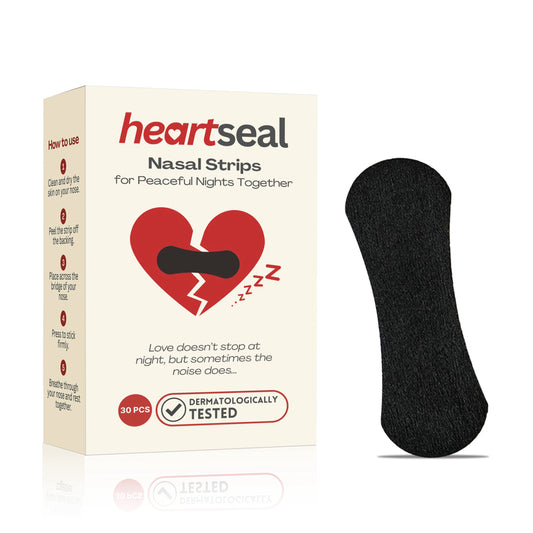
The most affordable and least invasive option. Nasal strips open the nasal passages from the outside while mouth tape keeps your lips gently sealed, encouraging nasal breathing throughout the night.
The HeartSeal bundle includes both mouth tape and nasal strips for $40. 30+ nights per pack. Hypoallergenic and designed specifically for overnight use.
Also useful for CPAP users: If you use a nasal mask or nasal pillow CPAP, mouth tape can prevent mouth leak, which is one of the most common complaints. Air escapes through the mouth, reduces CPAP pressure, and causes dry mouth. Mouth tape solves this. (Always discuss with your sleep specialist first.)
ALTERNATIVE 2
🦷 Mandibular Advancement Device (MAD)
Best for: Mild to moderate sleep apnea, snoring caused by tongue position
A custom-fitted mouthguard that pushes your lower jaw slightly forward during sleep. This opens the airway behind the tongue and reduces obstruction. The Australasian Sleep Association recommends MADs as a first-line treatment for snoring and mild OSA.
Where to get one in Australia: Ask your GP for a referral to a sleep dentist, or look for dentists who specialise in "sleep appliances" or "mandibular advancement splints." Some sleep clinics in major cities offer them directly.
ALTERNATIVE 3
📱 Positional Therapy Devices
Best for: People who only snore on their back (positional snoring)
Wearable devices that vibrate when you roll onto your back, training you to sleep on your side. Some are worn around the chest, others around the neck. There are also lower-tech solutions like special pillows and sleep positioners.
The catch: Only works if your snoring is position-dependent. Many people snore in all positions, especially mouth breathers. The Australasian Sleep Association notes that positional therapy has limited long-term adherence.
ALTERNATIVE 4
⚡ NightLase Laser Treatment
Best for: People who want a non-surgical procedure with no downtime
A laser treatment that tightens the soft tissue at the back of the throat, reducing the tissue vibration that causes snoring. It's done in a clinic, takes about 20 minutes, and typically requires 3 sessions over 6 weeks.
The catch: Expensive, results wear off over 12-18 months requiring repeat sessions, and evidence is still emerging. Available at specialist dental and ENT clinics in Sydney, Melbourne, Brisbane, and Perth.
ALTERNATIVE 5
🔪 Surgery
Best for: Structural issues (deviated septum, enlarged tonsils, nasal polyps) that haven't responded to other treatments
Various surgical procedures exist: septoplasty (straightening the nasal septum), turbinate reduction, tonsillectomy, or UPPP (uvulopalatopharyngoplasty, which modifies the soft palate and throat).
The catch: Invasive, painful recovery, results aren't guaranteed, and the Australasian Sleep Association notes that surgery is rarely a preferred first-line treatment for snoring. Should be a last resort after conservative options have been tried. Requires referral from GP to an ENT specialist.
AT A GLANCE
📋 Quick Comparison
The smartest approach: Start with the cheapest, least invasive option. If mouth tape and nasal strips reduce your snoring (as they do for most simple snorers), you're done for $40. If not, escalate to a mouthguard or specialist consultation knowing you've ruled out the simple fix first.
💤 Try the Simple Fix First
HeartSeal Mouth Tape + Nasal Strips. $40 for 30+ nights.
No machine. No fitting. No recovery time. Most people notice a difference from night one.
Get HeartSeal, $40Save $10 · Free shipping · Free returns · Hypoallergenic · 🇦🇺 Australian brand