



Mouth Taping for Sleep: Benefits, Safety, and How to Start
Mouth taping for sleep sounds strange the first time you hear it. You tape your mouth shut before bed. On purpose. But behind the initial reaction is a growing body of evidence, and thousands of Australians quietly sleeping better because of it.
Here's everything you need to know: what it is, why people do it, whether it's safe, and how to start tonight.
THE BASICS
🤷 What Is Mouth Taping?
You place a small strip of medical-grade tape across your lips before sleep to keep your mouth gently closed. The goal is to encourage nasal breathing throughout the night.
It's not about forcing your mouth shut. Good mouth tape like HeartSeal Mouth Tape uses a gentle hypoallergenic adhesive. Your lips are sealed, not clamped. You can open your mouth at any time, cough, speak, whatever. The tape just provides enough resistance to keep your mouth from falling open passively during sleep.
THE SCIENCE
👃 Why Breathe Through Your Nose at Night?
Your nose isn't just a backup breathing system. It's the primary one. When you breathe through your nose:
When you breathe through your mouth, you bypass all of this. You get drier air, less oxygen efficiency, and most commonly, snoring.
James Nestor covered this extensively in his bestselling book Breath. Andrew Huberman has dedicated multiple podcast episodes to it. The science isn't new. Mouth taping is just the simplest way to apply it.
THE BENEFITS
✅ What Mouth Taping Does for You
The #1 reason most people try mouth tape. When your mouth stays closed, air flows through your nose, the airway stays open, soft tissue doesn't vibrate. Most people notice a difference from the first night.
Waking up with a dry, sticky mouth is a sign you've been mouth breathing. This can lead to bad breath, increased risk of cavities, and gum problems. Mouth taping eliminates this completely.
Nasal breathing is associated with more time in deep sleep and REM sleep. Many mouth tapers report waking up feeling more rested, even with the same hours in bed.
Snoring doesn't just affect the snorer. It fragments the sleep of whoever is next to them. Reducing snoring improves sleep quality for both people in the bed.
SAFETY
🛡️ Is Mouth Taping Safe?
Yes, when done correctly with proper tape. Here are the key safety points:
😷 Mouth Taping with a CPAP
Some CPAP users tape their mouth to prevent air leaking out, which reduces CPAP effectiveness. If you use a nasal mask or nasal pillow CPAP, mouth taping can help maintain the seal and prevent dry mouth.
⚠️ Always discuss this with your sleep specialist first.
GET STARTED
📋 How to Start Mouth Taping
It takes 30 seconds. Here's the routine:
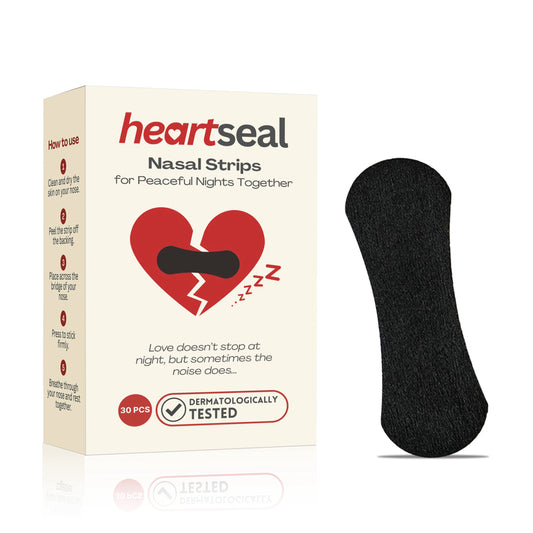
💡 Pro tip: For best results, pair mouth tape with nasal strips. The nasal strips open your passages while the mouth tape keeps air flowing through the nose. It's a two-part system that addresses snoring from both angles.
WHAT TO EXPECT
📅 Your First Month
It feels unusual. You're aware of the tape. But most people fall asleep faster than expected and wake up surprised at how well they slept. 😮
The tape becomes routine. You stop noticing it. Your partner starts commenting on the quieter nights. Dry mouth disappears. 😌
It's just part of your sleep routine, like brushing your teeth. You notice when you don't use it because the snoring comes back. 😴
💤 Try It Tonight
The HeartSeal Mouth Tape and Nasal Strip bundle is $40 and covers 30+ nights.
That's about $1.30 per night for quieter sleep, no dry mouth, and your partner back in the same bed.
Get the HeartSeal Bundle, $40Save $10 · Free shipping · Free returns · Hypoallergenic · 🇦🇺 Australian brand