

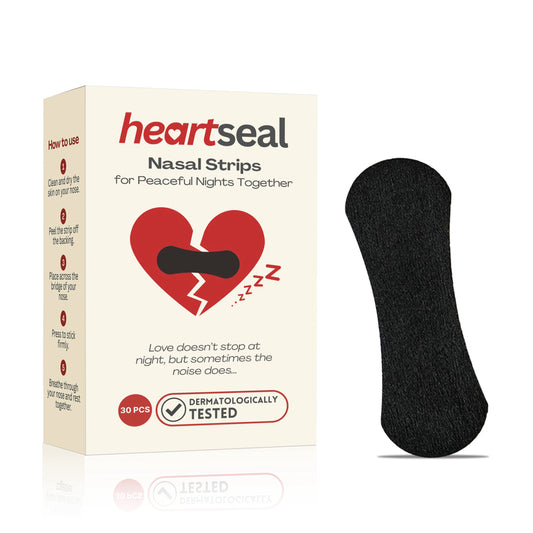


How To Use Nasal Strips Properly So They Do Not Fall Off At Night

Nasal strips look simple, but how you use them can make the difference between a peaceful night and a strip that peels off by 2 a.m.
If you have ever woken up to find your nasal strip stuck to your pillow instead of your nose, this guide is for you. Here we will walk through exactly how to use nasal strips correctly, where to place them on your nose, and how to remove them gently so your skin stays happy.
Why Correct Nasal Strip Placement Matters
Nasal strips work by lifting the sides of your nose to open the narrowest part of the nasal passages. To do that, the adhesive has to grip the right area of skin. If the strip is too high, too low, or placed on oily or damp skin, it will not create enough lifting force, and it is more likely to fall off.
Good placement gives you three benefits at once: a clearer nose, better snoring reduction when congestion is involved, and a strip that stays put all night.
Step 1: Clean Your Nose
Before you even open the packet, wash your face or at least the area around your nose. Use mild soap or a gentle cleanser, then rinse and pat dry with a clean towel. This step removes oil, sweat, sunscreen, and makeup that can weaken the adhesive. Avoid moisturisers or oils on the area where the strip will sit, because even a thin layer of product can stop the strip from sticking properly.
Step 2: Dry Your Skin Completely
Nasal strips do not like moisture. After washing, give your skin a moment to air dry or gently pat dry until there is no dampness left. If your skin is even slightly wet, the adhesive will struggle to grip. If you tend to sweat at night, keep your bedroom cool and avoid heavy blankets to reduce moisture around your face.
Step 3: Find The Right Position On Your Nose
Stand in front of a mirror and look at the bridge of your nose. Most nasal strips work best when placed across the middle of the nose, just above the flare of the nostrils. You should be able to feel the firm part of your nose bone near the top and the softer cartilage lower down. The strip usually sits on the softer area, spanning both sides evenly. Align the center of the strip with the center of your nose.
The ends should sit on the sides of your nose, not up on the cheeks and not up near your eyes. Many products include a small diagram on the box, so check that and copy the recommended placement.
Step 4: Apply The Strip Slowly And Smoothly
Carefully peel the backing away from the adhesive, trying not to touch the sticky surface too much. Place the middle of the strip onto the bridge of your nose first, then press the ends down on each side. Once it is in place, press firmly along the entire strip with your fingertips. Run your finger along each edge to seal it. Press and hold for 10 to 20 seconds to let the adhesive warm and bond to your skin. You should feel a gentle lifting sensation as the built in bands try to straighten and pull the sides of your nose outward.
Step 5: Check The Fit
Take a slow breath through your nose. If the strip is working well, your nose should feel a bit clearer and more open. Check the mirror. The strip should sit flat against your skin with no wrinkles or raised edges.
If one end is lifting already, it is better to remove the strip and start again with a fresh one rather than trying to re stick the same strip. Using a new strip gives the adhesive its best chance to work properly.
How To Use Nasal Strips For Snoring
If you are using nasal strips for snoring, apply them as the last step in your night routine after washing your face and brushing your teeth. Make sure your nose is completely dry before application. Pair the strip with snoring friendly habits, such as sleeping on your side, keeping your bedroom air from becoming too dry, and avoiding heavy alcohol intake close to bedtime. Nasal strips help most when snoring is linked to a blocked or narrow nose.
They will not treat sleep apnoea or snoring caused mainly by the throat, so if someone notices that you pause in your breathing at night, fall asleep easily during the day, or wake up unrefreshed, you should see a doctor for proper assessment.
How To Use Nasal Strips For Colds And Allergies
When you have a cold or allergy flare up, your nose can feel stuffed, heavy, and noisy at night. Nasal strips can be part of a comfort plan that might also include saline rinses or appropriate medications recommended by a healthcare professional. Apply the strip just before bed, once congestion is at its worst, using the same clean and dry skin steps. Many people find that this reduces mouth breathing and makes sleep more comfortable, even though it does not cure the cold or allergy itself.
Keeping Nasal Strips From Falling Off
If your nasal strips keep peeling off before morning, review these common reasons. The skin might not be cleaned enough, which leaves oils under the adhesive. There might be moisturiser, sunscreen, or makeup under the strip. The strip could be placed too low on the nostrils or too high toward the bridge. You might be using the wrong size for your nose, which can reduce grip. Or you could be sweating heavily at night. To fix this, cleanse the area more thoroughly, skip skincare products where the strip will sit, adjust the position slightly higher or lower until it feels secure, and experiment with different sizes or brands if needed.
How To Remove Nasal Strips Gently
In the morning, do not rip the strip off quickly. This can irritate the skin, especially if you use nasal strips every night. Instead, splash your nose with warm water or press awarm, damp cloth over the strip for a short time. This softens the adhesive. Then peel the strip slowly from each end toward the center. If you feel resistance, add more warm water. Once it is off, wash your face and apply a gentle moisturiser around the area, avoiding heavy rubbing.
Are There Any Risks When Using Nasal Strips?
For most people, nasal strips are safe and cause no problems when used as directed. A small number of people may experience redness, mild irritation, or slight tenderness where the strip was applied. If you have known allergies to adhesives or very sensitive skin, test the strip on another area first or speak with a healthcare professional before regular use.
Do not use nasal strips on broken, sunburnt, or very irritated skin. Remember that nasal strips are not a treatment for sleep apnoea. If you suspect a serious sleep issue, such as loud nightly snoring with pauses in breathing, choking at night, or severe daytime tiredness, you should seek medical advice.
Final Thoughts
Knowing how to use nasal strips properly makes them far more effective. Clean and dry your skin, place the strip in the right spot, press it down firmly, and remove it gently with warm water in the morning.
Used this way, nasal strips can be a simple, drug free way to support clearer breathing at night, especially when your nose is congested or narrow.